Alteration guide
Before you buy it: the golden rule of thrift-store alterations
Buy for the parts that cannot be changed. Alter the parts that can. A tailor can remove extra fabric, but cannot create fabric that is not there.
A thrift store can be one of the best places to find a well-made jacket, blazer, pair of pants, dress, or shirt. Older clothing may have better fabric and construction than many new garments, and a small alteration can turn an inexpensive find into something you wear for years.
But a low price does not automatically make a garment a good candidate for alterations. Some fit problems are straightforward. Others are difficult, expensive, or impossible because the fabric needed to make the change simply is not there.
Before you buy, look beyond the label and ask a better question: does this garment fit correctly in the places that matter most?
The golden rule: fit what cannot be changed
The safest thrift-shopping rule is simple: make sure the garment fits at the shoulders, closes comfortably at the waist, and is already long enough. Extra width and length can often be removed. Missing width and length cannot always be added.
Alterations work best when they refine a garment. They are less predictable when they have to rebuild its basic shape.
Rule one: the shoulders must fit
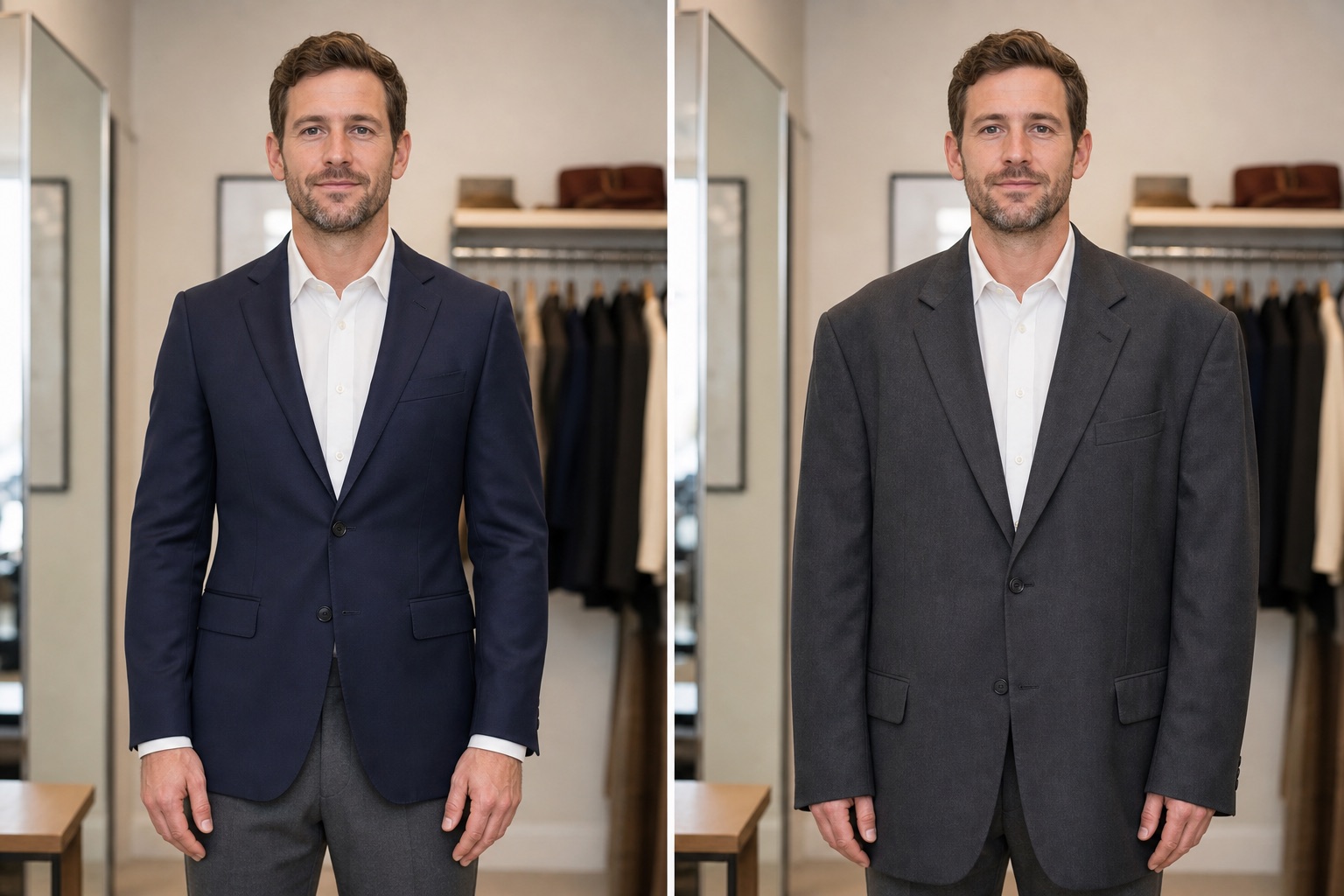
For a jacket, blazer, or structured coat, the shoulder is the first place to look. The shoulder seam should end close to the edge of your natural shoulder, and the sleeve should fall cleanly from that point.
Do not buy a larger jacket because you assume the shoulders can simply be reduced. Changing the shoulder can affect the sleeve head, armhole, chest, back, lining, and overall balance of the garment. Even when the work is technically possible, it may cost more than the thrift-store piece is worth.
If the shoulders are much too wide, leave the jacket on the rack.
Rule two: do not count on extending the waist
A waist that is too large can often be reduced. A waist that is too small should not be purchased with the expectation that it can be extended.
Some garments have a little fabric hidden in the seams, but many do not have enough to create a useful amount of room. Previous alterations may have already used the available allowance. Fabric inside the seam can also show old stitch marks, fading, or wear when it is opened.
The practical rule is to buy a waist that already closes comfortably. If there is extra room, ask whether it can be taken in.
Rule three: a hem cannot always be made longer
Pants, skirts, dresses, and sleeves can usually be shortened. Lengthening depends entirely on how much fabric is folded inside the existing hem.
Even when there is extra fabric, the old hemline may leave a permanent crease, fading, abrasion, or small holes. On a thrift-store garment, always inspect the inside of the hem before assuming it can be extended.
If the garment is already too short, do not rely on an alteration to solve it.
How a formal jacket should fit
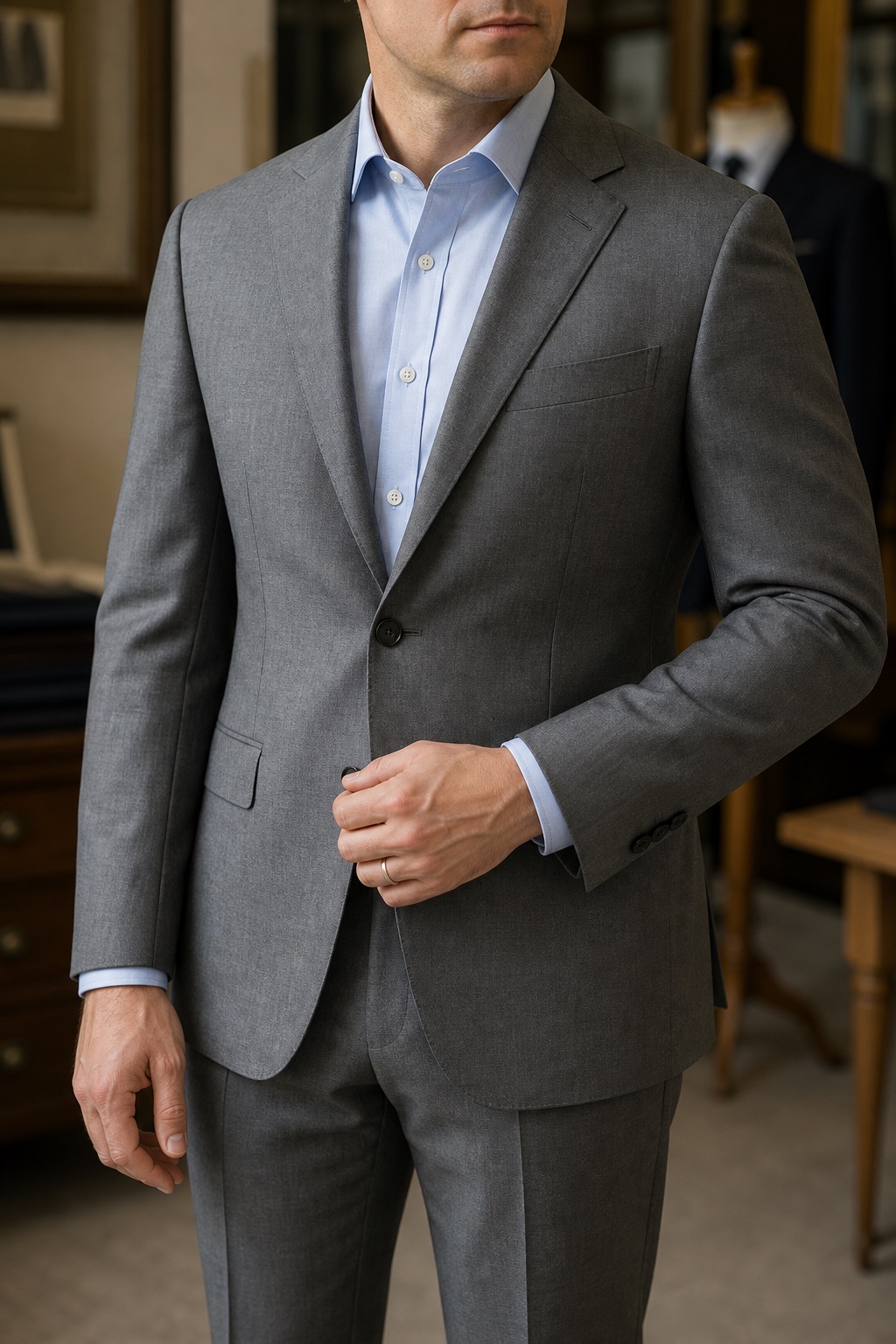
Try on a suit jacket or formal blazer over the dress shirt you intend to wear with it. The extra layer affects the fit.
- The jacket shoulder should end where your natural shoulder ends.
- The collar should sit close to the shirt collar without a large gap.
- The lapels should lie flat against the chest.
- When the jacket is buttoned, the front should sit smoothly without a strong X-shaped pull.
- The sleeve commonly allows about one-quarter to one-half inch of shirt cuff to show.
- The jacket should have enough room for comfortable movement without hanging loosely from the body.
How a casual blazer should fit
A casual blazer can be softer, less structured, and slightly shorter than a traditional suit jacket. It may be worn open with jeans, chinos, a casual button-down, a polo, or a knit shirt. That flexibility does not make shoulder fit less important.
Try it on over the kind of shirt you will actually wear. A jacket that fits over a thin T-shirt may feel tight over an Oxford shirt or sweater. The shoulders should still end naturally, the chest should have room without pulling, and the sleeves should finish neatly around the wrist.

Check the shirt, too
A poorly fitted shirt can make a good jacket look wrong. The shirt shoulder seam should meet the edge of the shoulder. The collar should close comfortably, the chest should not pull between the buttons, and the sleeves should reach the wrist.
Extra fabric through the shirt body can often be reduced. A shirt that is tight through the shoulders, chest, or collar is not a dependable alteration project.
Alterations cannot repair damaged fabric
Fit is only part of the decision. Look closely at the collar, cuffs, elbows, underarms, seat, pockets, hems, lining, and zipper area. Fading, permanent stains, stretched fabric, worn fibers, moth holes, and weak seams may become more obvious after cleaning.
A tailor can reshape sound fabric. Alterations cannot make worn fabric new again.
Why the dry cleaner should see it before alterations
A secondhand garment has a history you do not know. It may contain body oils, odors, dust, old stains, or previous home treatments. Cleaning can also reveal damage that was hidden in the store.
Bring the garment to the dry cleaner for inspection before fitting and sewing. The care label, fabric, construction, stains, and condition should be reviewed first. When appropriate, the garment should be cleaned before the final fitting so the tailor is working with a clean garment in its finished size and shape.
After the alteration is complete, professional pressing gives the seams, sleeves, lapels, and hems their finished appearance. That is how a thrift-store discovery becomes part of your own wardrobe.
A checklist to use before you buy
- Do the shoulders fit without extending past your natural shoulder?
- Does the waist close comfortably?
- Is the garment already long enough?
- Does the chest sit smoothly without pulling?
- Are the fabric, lining, seams, zipper, and buttons in good condition?
- Are you wearing the right shirt or layer while trying it on?
- Would a simple adjustment improve the fit, or would the garment need to be rebuilt?
The best thrift-store find is not necessarily the one that fits perfectly on the rack. It is the well-made garment that fits in the important places and can be realistically cleaned, adjusted, and given a second life.
Found something worth saving?
Bring it to Flower Fresh Cleaners for cleaning and an alteration assessment at 1728 S Grand Ave, Glendora, CA 91740, or call (626) 914-2545. No appointment is needed for most alterations.