Garment-care guide
Clean first, alter second: why the order matters
The final fitting should usually happen after the garment has been inspected and cleaned. That way, the tailor works with the garment in the condition and shape you will actually wear.
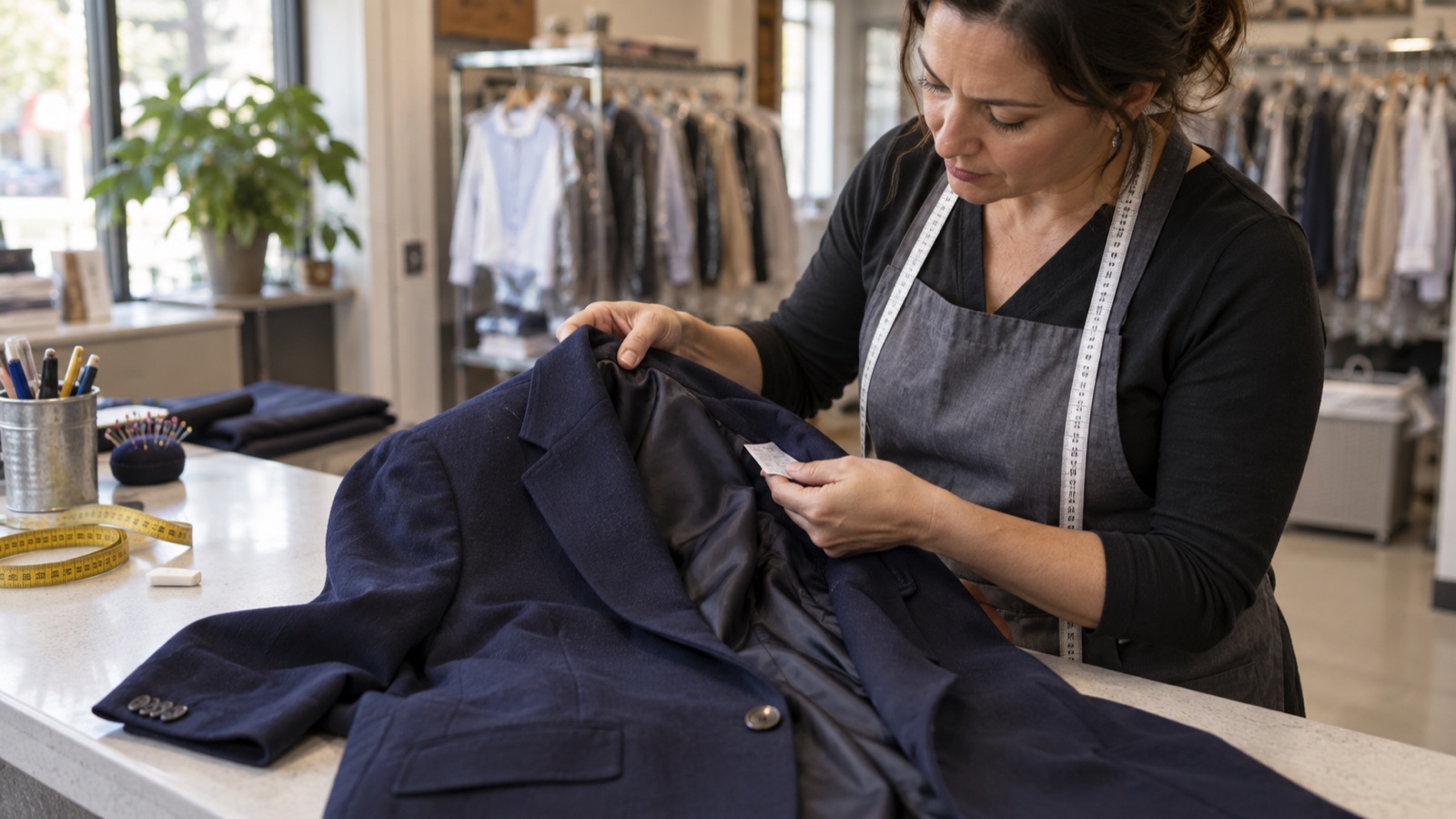
You found a jacket, dress, pair of pants, or coat that almost fits. The first instinct may be to take it straight to a sewing machine. But especially with thrifted and pre-owned clothing, there is an important step before the final fitting: find out what condition the garment is really in and how it should be cleaned.
This is not a rule that every garment must be cleaned blindly. It is a better sequence: inspect first, choose the correct care method, clean when appropriate, and then make the final alteration decisions.
Cleaning reveals the garment you actually own
Secondhand clothing can hold body oils, odors, dust, old spills, home-treatment residue, and pressing marks that are difficult to judge under store lighting. Cleaning may make a stain less visible, but it may also reveal fading, abrasion, weakened fibers, old stitch holes, or a previous repair.
Those discoveries matter before money is spent on alterations. A tailor can reshape sound fabric. Sewing cannot make worn fibers strong again, restore missing color, or guarantee that an old stain will disappear.
The fit can look different after proper care
Wrinkles, stretched knees, crushed lapels, and a tired-looking hem can change how a garment hangs. Professional finishing restores shape and helps the fabric settle, making length, balance, and drape easier to judge.
Some washable fabrics can also change after their first proper wash and dry. Dry-clean-only garments are handled differently, but the care label, fabric, construction, and previous treatment still need to be considered. The point is not to promise that every garment will change size. It is to avoid fitting and sewing before its stable condition is understood.
The best fitting is done in the right layers
After cleaning, try on the garment with what you will normally wear underneath it. A formal jacket should be fitted over the dress shirt you intend to use. A casual blazer may need room for an Oxford shirt or light sweater. Pants should be checked with the shoes and waistband position you normally use.
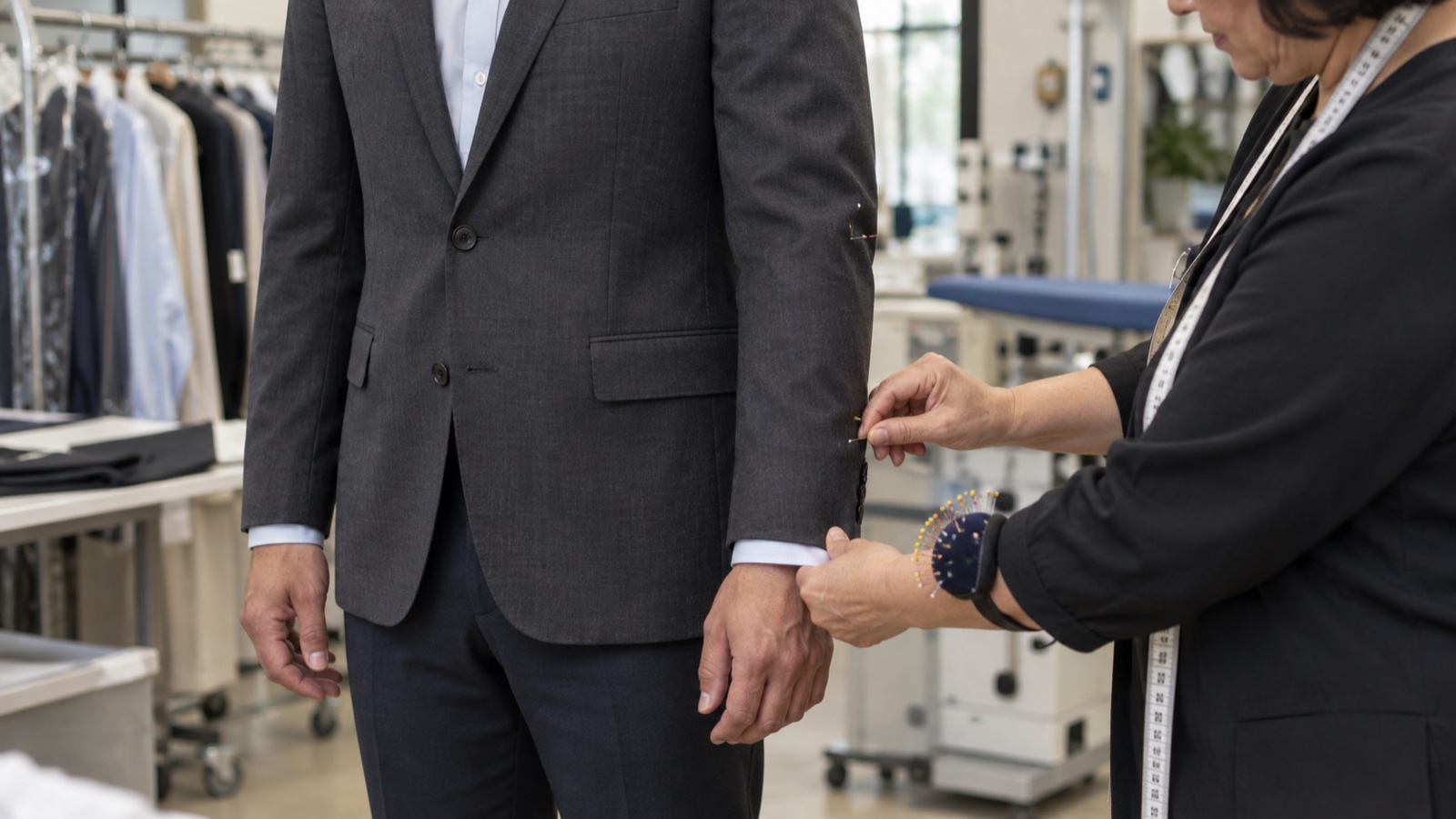
Cleaning first does not make every alteration possible
The same golden rule still applies: buy for the parts that cannot be changed, and alter the parts that can.
- A jacket that is much too wide at the shoulders is usually a poor purchase.
- A waist can often be reduced, but it cannot be reliably extended without enough hidden seam allowance.
- A hem can be shortened, but it can be lengthened only when enough usable fabric remains inside.
- Cleaning and pressing can improve appearance and shape, but they do not create missing fabric or repair permanent fiber damage.
For a fuller explanation of those limits, read the golden rule of thrift-store alterations.
Why one garment-care stop can be helpful
When cleaning and alterations are considered together, the order of work is easier to manage. The garment can be inspected for care risks and damage, cleaned when appropriate, fitted in its finished condition, altered, and then professionally pressed.
That coordination is especially useful for lined jackets, dresses, structured coats, delicate fabrics, and thrift-store finds with an unknown history. It also prevents the awkward situation of completing an alteration and only afterward discovering a stain, odor, weak seam, or care problem that changes whether the garment is worth keeping.
A practical order to follow
- Inspect: Check the care label, fabric, lining, seams, closures, stains, wear, and previous alterations.
- Decide: Confirm that the garment is a sound candidate for cleaning and alteration.
- Clean: Use the care method appropriate for the garment when cleaning should precede the final fitting.
- Fit: Wear the correct shirt, sweater, shoes, and underlayers.
- Alter: Mark only realistic changes that improve the existing garment.
- Finish: Press the completed work so hems, seams, sleeves, and lapels sit correctly.
When should you ask before cleaning?
Ask for an inspection first when a garment has no care label, has beads or glued decoration, contains leather or unusual trim, shows severe damage, or needs a complex structural alteration. In those cases, cleaning and alteration decisions should be made together rather than following a one-size-fits-all rule.
The goal is simple: do the work in an order that protects the garment and gives the alteration the best chance of looking right.
Bring the garment before deciding
Flower Fresh Cleaners can inspect cleaning needs and discuss realistic alterations at 1728 S Grand Ave, Glendora, CA 91740. For questions, call (626) 914-2545.